LXA is a private limited company based in country Z. It makes children’s clothing. LXA sells its products in competitive markets in several countries. LXA’s directors are considering different ways for the business to grow. The Finance Director has prepared some financial information before meeting with some of LXA’s stakeholders. An extract is shown in the Table. The Marketing Director wants LXA to start producing clothing for adults.
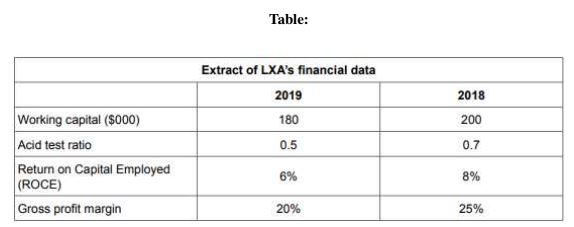
11 Explain one way each of the following stakeholder groups might use LXA’s financial information. [6]
Possible KN Points:
Suppliers:
• Liquidity position
• Assess risk of default
• See level of debts
Shareholder:
• Help make decisions on keeping, buying or selling shares
• Check performance e.g. profit
• Assess (possible) level of dividend
Ad blocker detected: Our website is made possible by displaying online advertisements to our visitors. Please consider supporting us by disabling your ad blocker on our website.
11 Explain one way each of the following stakeholder groups might use LXA’s financial information. [6]
Ch 26 Analysis of accounts
-
BASEL Moderator
- Grand Commerce Guru
- Posts: 216
- Joined: Fri Dec 05, 2025 8:35 pm
Return to “Ch 26 Analysis of accounts”
Jump to
- Students Den
- ↳ Assignments & Announcements!
- AS Level Business
- ↳ Unit 1: Business & its Environment
- ↳ Ch 1 Enterprise
- ↳ Ch 2 Business structure
- ↳ Ch 3 Size of business
- ↳ Ch 4 Business objectives
- ↳ Ch 5 Stakeholders in a business
- ↳ Unit 2: Human Resource Management
- ↳ Ch 10 Human resource management
- ↳ Ch 11 Motivation
- ↳ Ch 12 Management
- ↳ Unit 3: Marketing
- ↳ Ch 17 The nature of marketing
- ↳ Ch 18 Market research
- ↳ Ch 19 The marketing mix – product and price
- ↳ Ch 20 The marketing mix – promotion and place
- ↳ Unit 4: Operations Management
- ↳ Ch 23 The nature of operations
- ↳ Ch 24 Inventory management
- ↳ Ch 25 Capacity utilisation and outsourcing
- ↳ Unit 5: Finance & Accounting
- ↳ Ch 29 Business finance
- ↳ Ch 30 Forecasting and managing cash flows
- ↳ Ch 31 Costs
- ↳ Ch 32 Budgets
- IGCSE Business
- ↳ Unit 1: Understanding Business Activity
- ↳ Ch 1 Business activity
- ↳ Ch 2 Classification of businesses
- ↳ Ch 3 Enterprise, business growth and size
- ↳ Ch 4 Types of business organisation
- ↳ Ch 5 Business objectives and stakeholder objectives
- ↳ Unit 2: People in Business
- ↳ Ch 6 Motivating employees
- ↳ Ch 7 Organisation and management
- ↳ Ch 8 Recruitment, selection and training of employees
- ↳ Ch 9 Internal and external communication
- ↳ Unit 3: Marketing
- ↳ Ch 10 Marketing, competition and the customer
- ↳ Ch 11 Market research
- ↳ Ch 12 The marketing mix: product
- ↳ Ch 13 The marketing mix: price
- ↳ Ch 14 The marketing mix: place
- ↳ Ch 15 The marketing mix: promotion
- ↳ Ch 16 Technology and the marketing mix
- ↳ Ch 17 Marketing strategy
- ↳ Unit 4: Operations management
- ↳ Ch 18 Production of goods and services
- ↳ Ch 19 Costs, scale of production and break-even
- ↳ Ch 20 Achieving quality production
- ↳ Ch 21 Location decisions
- ↳ Unit 5: Financial Information and Financial Decisions
- ↳ Ch 22 Business finance: needs and sources
- ↳ Ch 23 Cash flow forecasting and working capital
- ↳ Ch 24 Income statements
- ↳ Ch 25 Statement of financial position
- ↳ Ch 26 Analysis of accounts
- ↳ Unit 6: External Influences on Business Issues
- ↳ Ch 27 Economic issues
- ↳ Ch 28 Environmental and ethical issues
- ↳ Ch 29 Business and the international economy